You flip a switch, the light comes on, and that’s about as much thought as most of us give the wiring behind the wall. Fair enough. But when did anyone last actually look at your electrical panel, your grounding, or the connections behind your outlets? At DC Electric, our residential electrical services cover homes across Utah, and a home electrical inspection is one of the simplest ways to answer that question.
Maybe you’re buying or selling a house. Or maybe a breaker has started tripping whenever the microwave and the toaster run at the same time. Either way, this guide covers what a home electrical inspection looks at, what it costs, and how to tell if yours is overdue.
In short, if you can’t remember your last electrical checkup, if the house is older, or if you’ve added something heavy like an EV charger or a hot tub, it’s worth scheduling one. And if you smell burning right now, skip ahead to the warning signs section.
What Is a Home Electrical Inspection?
A home electrical inspection is a look at your electrical system by someone qualified to read it, usually a licensed electrician. They go through the parts they can see and reach safely, then tell you what they found. It isn’t a rebuild, and it isn’t a guarantee. Think of it as a snapshot of where your system stands today.
What an Inspection Looks At
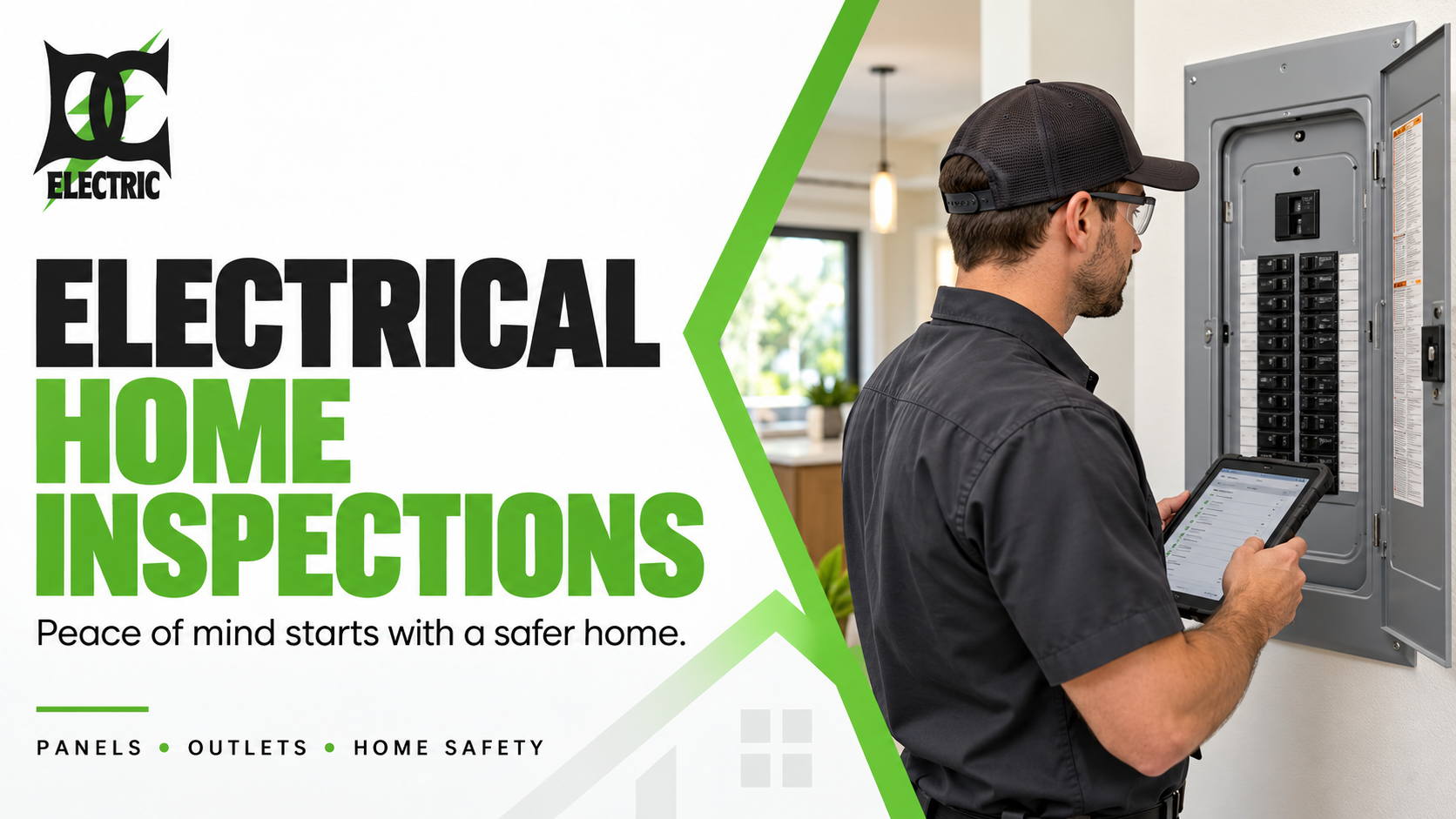
Scope varies from one provider to the next, so ask what’s included before you book. DC Electric’s inspection is a visual review of the home’s accessible electrical components, which may include:
- Electrical panels and circuit breakers
- Grounding and bonding
- GFCI and AFCI protection
- Outlets and switches
- Visible wiring and connections
- Smoke and carbon monoxide detector locations
- Electrical service equipment
What an Inspection Can’t Do
A visual inspection can’t see inside finished walls, so a problem hidden back there can slip past it. It isn’t a code certification, an engineering evaluation, or a formal real estate inspection, either. And no inspection can promise that a fire will never happen.
What it can do is flag things that look worn, overloaded, or out of date. You walk away with an inspection report or a set of findings and recommendations, which beats guessing.
Why Inspect an Electrical System That Seems to Work Fine?
Because electrical problems are quiet. A loose connection doesn’t announce itself, and an overloaded circuit works fine right up until it doesn’t. The Electrical Safety Foundation International (ESFI) puts it plainly: routine safety checkups are critical for the safety of your home.
The risk to any single house is small, so there’s no reason to panic. Still, aging parts, extra electrical load, and old DIY fixes pile up without much notice. The U.S. Fire Administration also publishes electrical fire prevention guidance for homeowners if you want more background.
Home Electrical Fires and Wiring Risks by the Numbers
The risk is real and tracked, though these are national figures, not Utah ones.
| Statistic | Figure | Source |
| Estimated home electrical fires per year in the U.S. | About 51,000 | ESFI (years covered not stated) |
| Aluminum-wired homes built before 1972 vs. copper-wired homes: outlet connections reaching fire hazard conditions | 55 times more likely | U.S. Consumer Product Safety Commission (CPSC) |
| Years of aluminum branch-circuit wiring were used most | 1965 to the mid-1970s | CPSC |
ESFI estimates around 51,000 home electrical fires a year, though it doesn’t say which years that covers. Separately, the CPSC found that homes built before 1972 and wired with aluminum were 55 times more likely to have outlet connections reach fire hazard conditions than copper-wired homes. That survey looked only at outlet connections, so it doesn’t provide a complete picture. Treat these numbers as a sense of scale, not a prediction for your house.
Home Inspection vs. Electrical Inspection: What’s the Difference?
These get lumped together all the time. A general home inspection is a broad visual survey of the whole house, and electrical is one section among many. A dedicated electrical inspection focuses a licensed electrician’s attention on the electrical system alone. A municipal inspection is something else again: your city or county signing off on permitted work.
Here’s a side-by-side comparison of the three.
| Comparison | General Home Inspection | Electrician’s Inspection | Municipal Permit Inspection |
| Who does it | General home inspector | Licensed electrician | Local building department inspector |
| Why it happens | Often during a home purchase or sale | Routine checkup, older home, warning signs, new loads, or before a sale | Required when permitted electrical work is done, such as a panel or service change |
| Electrical depth | One part of a whole-house review | Electrical system only | The permitted work only, checked against the adopted code |
| What you get | A general report covering many systems | Findings and recommendations for the electrical system | Approval or corrections for the permitted work; confirm details with your city |
| Limits | Visual survey; depth varies by inspector | Accessible components only; not a code certification | Covers the permitted scope, not the whole house |
If a general inspection flags something electrical, the next step is to follow up with an electrician. It’s also fair to ask the inspector what they actually opened and tested. That answer tells you how much weight to give the electrical section of the report.
Warning Signs That Mean Stop and Call Right Now
Some signs shouldn’t wait for a scheduled visit. Call a licensed electrician promptly if you notice any of these:
- A burning or hot-plastic smell near an outlet, switch, or panel
- Scorch marks, melted plastic, or discolored cover plates
- Outlet or switch plates that feel warm to the touch
- Buzzing, crackling, or sizzling sounds
- Circuit breakers that trip again and again
- Damaged or exposed wiring
- Cracked or loose outlets and switches
If you see smoke, flames, or sparks that keep going, get everyone out and call 911 from outside. Don’t touch the equipment, and don’t throw water on an electrical fire. For a burning smell with nothing visibly on fire, stop using that outlet or appliance, keep clear of it, and call a licensed electrician right away.
One thing to be clear about: keep the panel closed, avoid poking at wiring, and do not test live circuits. Electrical shock is a real risk, and this is a job for a professional.
Quick Reference Checklist: Time to Schedule an Inspection?
- These aren’t emergencies, but they’re valid reasons to book a checkup:
- You can’t remember the last electrical checkup
- The home or the electrical panel is older
- Two-prong outlets or possible grounding concerns
- Lights that flicker or dim now and then
- A planned EV charger, hot tub, or addition that adds electrical load
- You’re buying, selling, or taking over a rental
- Past DIY or unpermitted work you can’t verify
- Smoke and carbon monoxide detectors you aren’t sure are placed correctly and working
Not every flicker means trouble, and not every warm cover plate means a fire is coming. But a checkup turns “I wonder” into a straight answer.
Home Electrical Inspection for Older Homes
Age is one of the clearest reasons to bring in an electrician. Wiring methods change over the decades, and some older ones carry specific concerns. Three come up most.
Knob-and-Tube Wiring
Knob-and-tube wiring doesn’t have a ground wire at all, so it can’t safely support grounded outlets or GFCI protection. It can also overheat when it’s buried under attic insulation. If an inspection turns it up, rewiring may come into the conversation, and our guide to home rewiring in Utah walks through what that involves.
Aluminum Wiring
Aluminum branch-circuit wiring was used most from about 1965 into the mid-1970s, according to the Consumer Product Safety Commission. It expands and contracts more than copper, which can gradually loosen connections at outlets and switches. The CPSC’s advice is to have a qualified electrician evaluate it, not to try fixing it yourself.
Two-Prong Outlets and Older Panels
A two-prong outlet often points to a missing equipment ground. An electrician can tell you what your options are and whether the panel behind it can handle your home’s electrical load today.
Repair, Panel Upgrade, or Rewire?
Not every finding means a big project. A worn receptacle or a single failing breaker is a small repair. A crowded or outdated panel may call for an upgrade, and a panel can often be upgraded on its own if the existing branch wiring is in decent shape.
Aging or outdated wiring that’s hazardous or past repair, like knob-and-tube, may point toward a rewire. Honestly, which one you need depends on what the electrician finds, so ask for the findings in writing with a separate estimate.
What Happens During a Home Electrical Inspection?
It usually starts with a conversation about what you’ve noticed. Then the electrician works through the accessible parts of the system: the panel and breakers, visible wiring, outlets and switches, grounding and bonding, and the service equipment. Some providers add testing on top, and thermal imaging, for example, shows up as an extra line item in some cost guides. Not every electrician runs the same tests every time, so ask what’s included.
Will You Lose Power?
Much of a visual inspection may not need anything switched off, but some steps could. Ask when you book whether any circuits will be shut off and for how long. That way you can plan around a work-from-home day or a freezer full of food.
What You Get Afterward
You should get the electrician’s findings and recommendations: what looks fine, what needs attention, and what to do next. Recommended repairs are normally quoted separately from the inspection itself. You’re free to take your time deciding.
How Much Does a Home Electrical Inspection Cost?
Honestly, it depends. Here’s a rough breakdown using Angi’s cost guide (updated August 2026) as a reference. Angi doesn’t say whether its figures are national or regional, so treat them as a ballpark, not a Utah quote.
| Inspection Type | Typical Cost | Notes |
| Standard inspection (wiring, outlets, breakers) | $100 to $200 | A basic visual checkup |
| Full home electrical inspection | Around $350 on average | Higher for larger homes |
| Infrared (thermal) inspection | About $250 extra on average | Added on top of a standard inspection |
What Changes the Price
The size and age of the home matter, along with the scope of the inspection, how easy the equipment is to reach, and local labor rates. Diagnostic testing adds cost, and so can an inspection tied to a home sale. Larger homes, multiple panels, or detached structures often take more time too.
Inspection Fee vs. Repair Costs
Keep the inspection fee separate from what repairs or upgrades might cost. The inspection tells you what needs attention. Any work that follows gets its own estimate.
Electrical Inspection Before Buying a House
Electrical surprises often appear at the worst time, usually right after closing or in the middle of a negotiation. Whether you’re buying, selling, or renting homes out, checking the wiring before you sign the paperwork can save you a lot of stress. Here’s how it plays out for each side.
Buyers
A general inspection will note the electrical issues it can experience. If it raises questions about the panel, the wiring, or grounding, a dedicated electrical look before closing gives you detail to negotiate with or plan around.
Sellers
Knowing the condition of your electrical system before you list means fewer surprises mid-deal.
Landlords and Property Managers
Rentals change hands, and a periodic checkup with documented findings keeps problems from sitting unnoticed between tenants. If you also manage commercial space, our guide to a commercial LED lighting upgrade covers a separate project, but it’s a useful read.
Home Electrical Inspection in Utah: Licenses, Codes, and Permits
Utah has its own licensing rules, code process, and utility requirements, and they don’t always line up neatly from one city to the next. That’s why a generic checklist only gets you so far. Here’s what you need to know about who can do the work, which code applies, and when an inspection is no longer optional.
Licensed Electricians in Utah
Utah’s Division of Professional Licensing (DOPL) lists several electrician license types: apprentice, journeyman, residential journeyman, master, and residential master. DOPL also notes that a project owner can’t hire some individual licensees unless they’re associated with a licensed company. Before you hire anyone, check their license with DOPL.
Which Code Edition Applies?
Electrical work is measured against NFPA 70, the National Electrical Code, and Utah handles its construction codes at the state level, with your city or county enforcing them. The Utah State Building Code Commission is one body worth knowing about here.
Which NEC edition applies to a particular residential permit isn’t something to guess at. Published summaries of Utah’s adoption don’t all agree on the edition and effective date, so confirm both, plus any local amendments, with your building department. That is relevant for electrical code compliance on any permitted job.
Routine Checkup vs. Required Inspection
A routine checkup is something you choose. A municipal inspection is something the permit process requires when you do certain work, like a panel or service change. Rocky Mountain Power’s service requirements say it may refuse to connect service without the necessary approvals from the local jurisdiction.
Cities set their own steps. Orem, for example, requires clearance from its Building Safety Division before Rocky Mountain Power reconnects a meter after a change-out. Rules differ by city, property type, and project scope, so check with your local building department and the utility before work begins. Older Salt Lake City neighborhoods and newer subdivisions in places like West Valley City or Provo can also have completely unique electrical profiles.
How Often Should You Get an Electrical Inspection?
There’s no single answer. Many providers and cost guides suggest every three to five years, with shorter gaps for older homes. Angi, for one, suggests every two to three years for homes 25 years old or older.
That’s a guideline, not a Utah or code requirement. Events matter more than the calendar: buying a house, a renovation, new high-load equipment, or any of the warning signs above.
Why Choose DC Electric for Your Utah Home Electrical Inspection
You’ve got options when hiring an electrician, so it’s fair to ask what sets one apart. We’d rather you judge DC Electric on the basics: licensing, clear communication, and a plain explanation of what’s wrong and what it would take to fix. Here’s what to expect when you book a home electrical inspection with us.
A Licensed Electrical Contractor
Direct Current, Inc. (DC Electric) is a fully licensed electrical contractor based in Sandy, serving homeowners across Utah. Our rewiring work follows National Electrical Code standards and local permitting requirements.
Clear Findings, No Guesswork
After the inspection, you receive our findings and recommendations: what may need attention, what improvements could be considered, and what your next steps are. Any recommended work is quoted separately.
The Home Electrical Inspection Offer
DC Electric’s Electrical Home Inspection is $195 upfront and covers homes up to 4,000 square feet. If you accept the recommended work quoted after the inspection within 24 hours, you will receive a $195 credit toward it. Accept within two weeks, and the credit is $150. The credit has no cash value and can’t exceed the approved electrical work.
Larger homes, multiple panels, detached structures, or conditions that need extra inspection time may cost more, and recommended repairs are quoted separately.
Schedule Your Home Electrical Inspection
Ready to find out where your system really stands? Schedule a home electrical inspection with DC Electric, or call 801-600-1600.
Electrical Safety Disclaimer
This article is for informational and educational purposes only. Residential electrical systems involve high-voltage wiring and live breaker panels, and DIY electrical work can cause electrical shock, serious injury, or fire. Always consult a licensed, qualified electrician for diagnostic work, panel service, and repairs. Direct Current, Inc.’s licensed electricians are available for home electrical inspections across Utah.
Home Electrical Inspection FAQs
Still have questions? You’re not alone. These are the most common questions people search for when they start looking into a home electrical inspection, and the answers are intentionally brief. If your situation doesn’t quite fit, or you want a straight answer for your house, reach out to our team directly.